Took my back from “ow” to “huh”
Three weeks in and I no longer wince getting out of the car. I use it for five minutes before bed and ten in the morning.


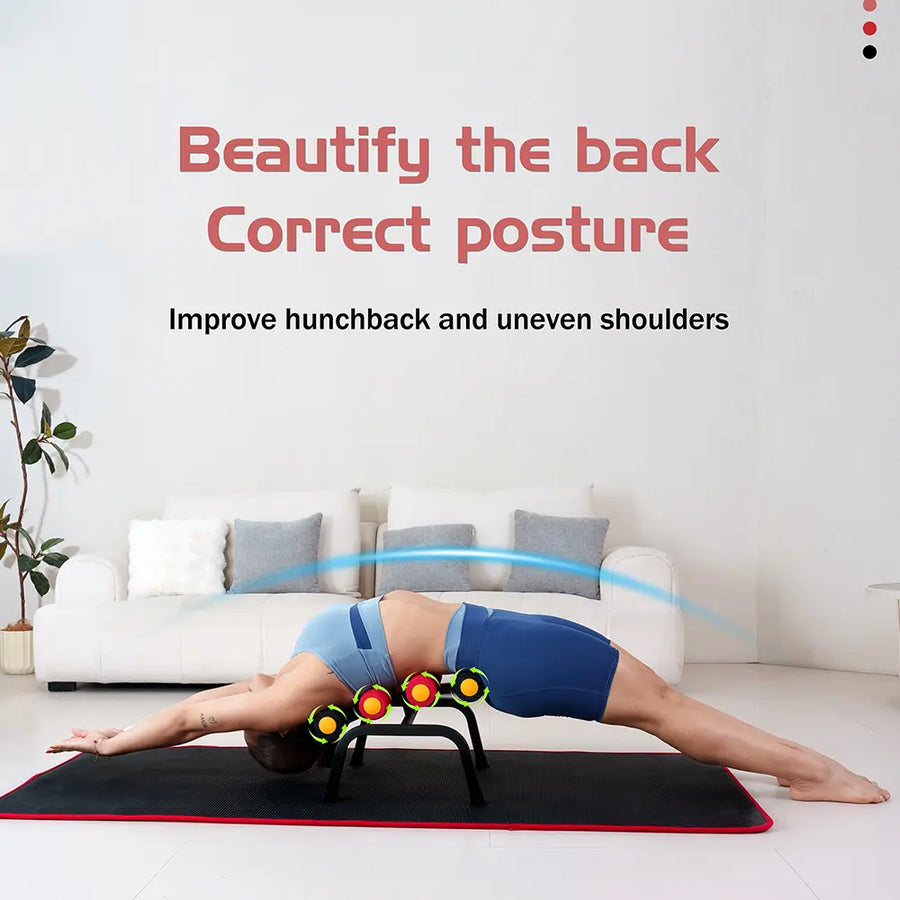


Hover any callout. Steel, foam, three angles — that’s the whole machine.
14-gauge powder-coated steel side panels, welded at every joint. Rated to 300 lb, tested past 600.
Lock the frame at 135°, 180°, or 225°. Pop the knob, swing the assembly, snap the detent.
Four tiers of high-density EVA foam over a steel core. Dense enough to support 300 lb. Soft enough to lie on for ten minutes.
Every roller spins on a sealed shaft. No grease, no maintenance.
Vulcanized rubber pads at every contact point. Grips hardwood, tile, low-pile rugs. Won’t mark the floor.
Eighteen inches wide, twelve inches deep. Total weight under 16 lb.
Each mode was developed with a physical therapist. Tap any dot to learn more.
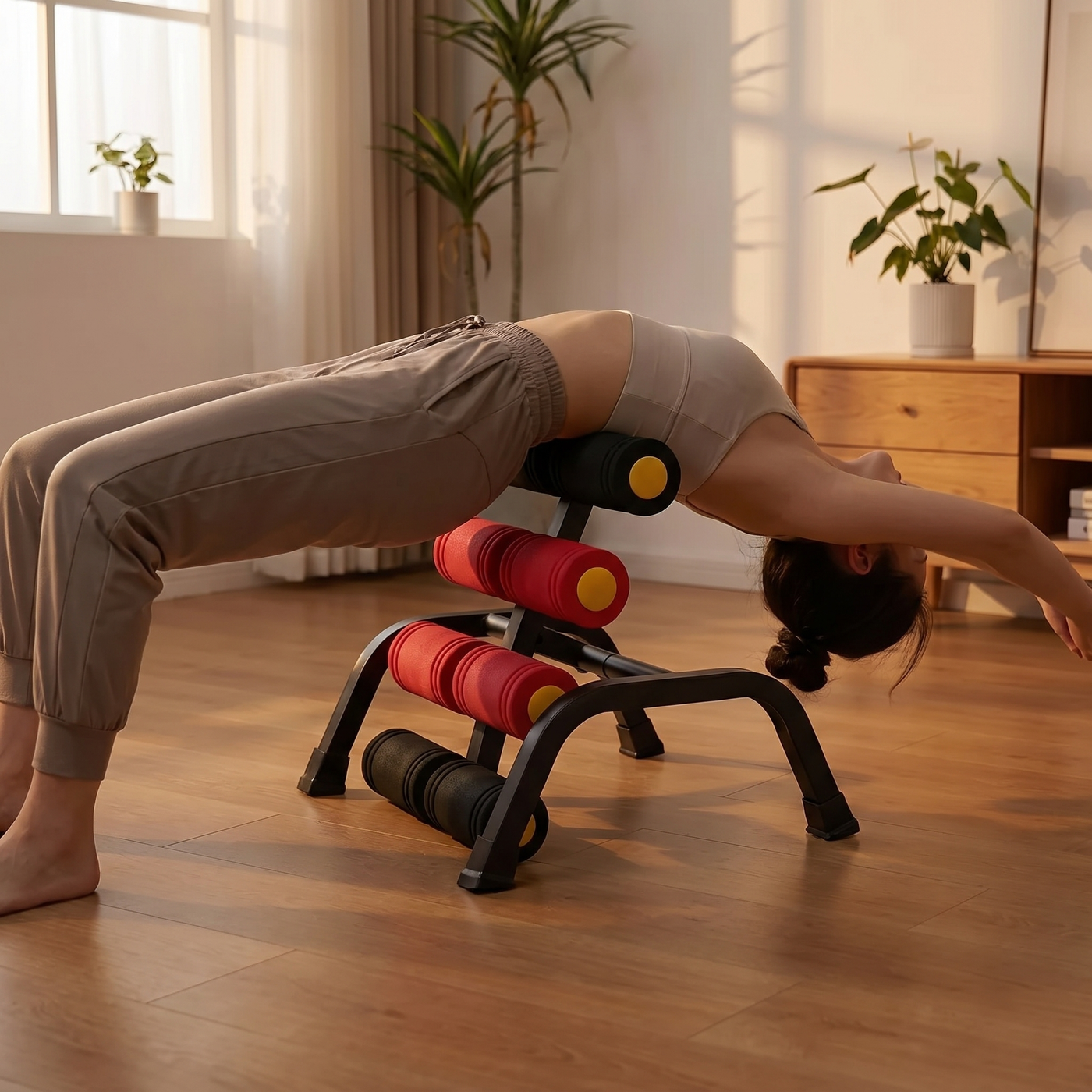
Lay your back over the rollers, let your head and hips hang. The cushioned cylinders track your spine — three minutes is usually enough.
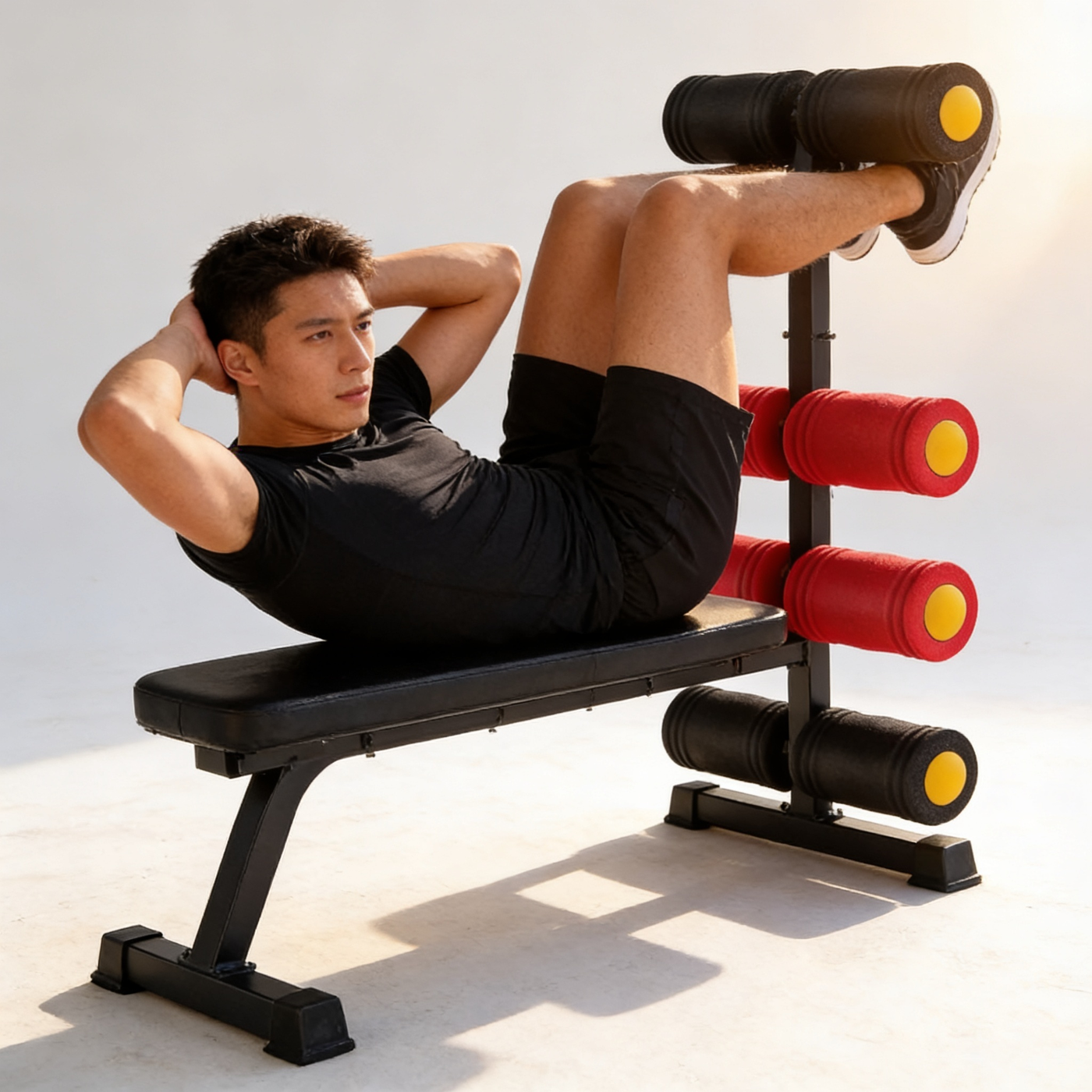
Sit with the rollers behind your back, hook your knees over the top tier, and curl. The cushioning protects your spine on every rep.
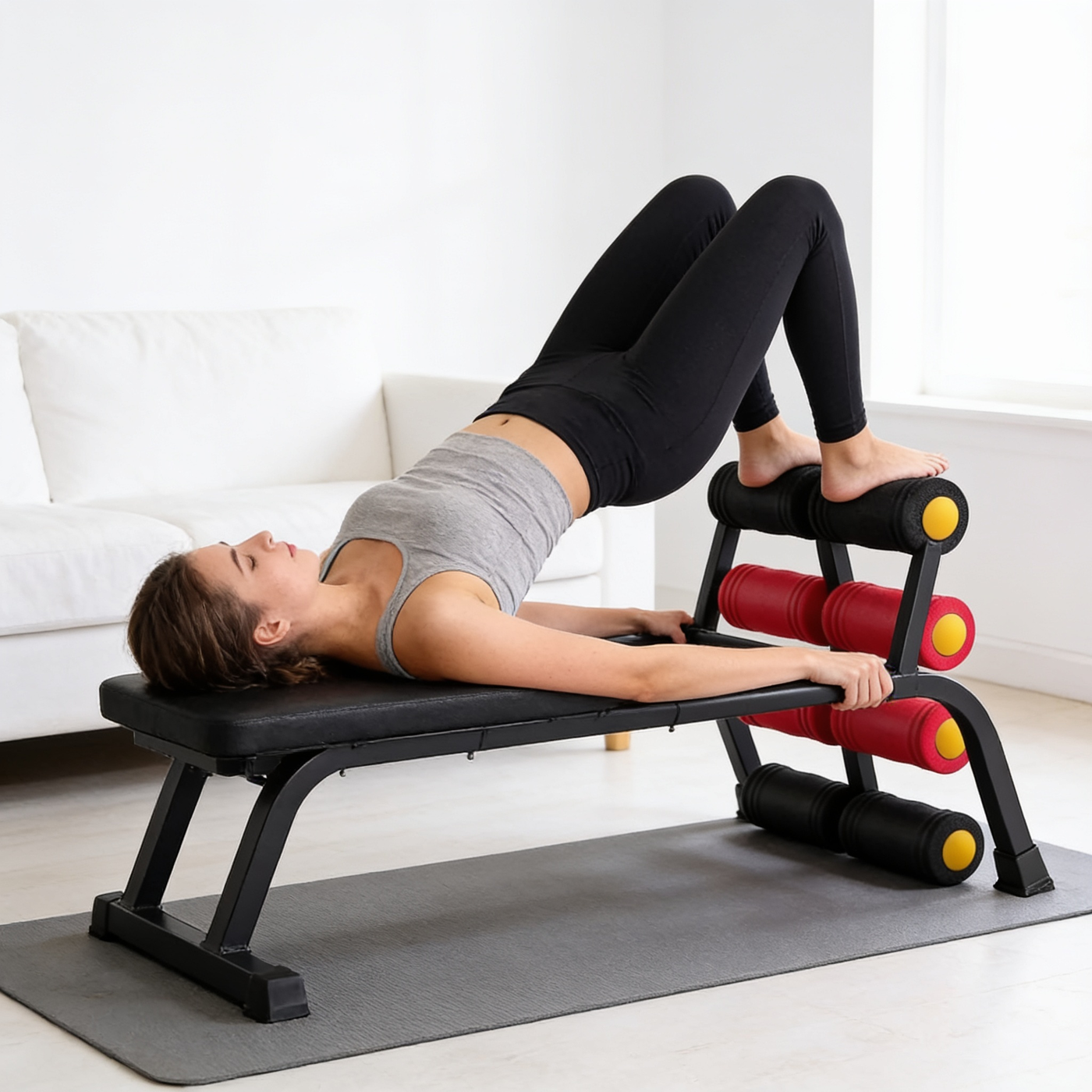
Drape over it for a supported backbend, prop your legs against it for a shoulder stand, or sit beside it for a deep hip opener.
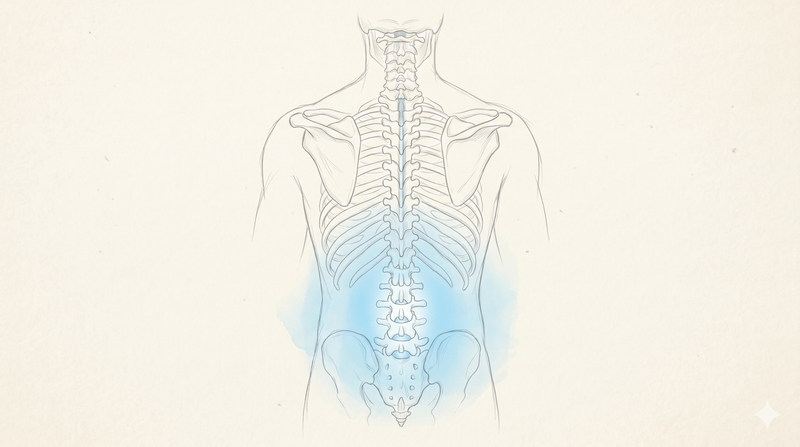
The first thing most people feel is a lighter lower back. Gentle inversion lengthens the spine and reduces compression on the discs — five minutes a day adds up quickly.
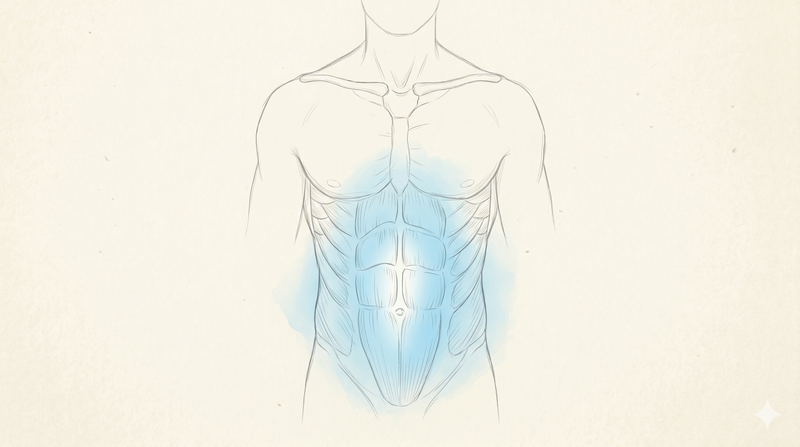
The decline bench loads the abdominals through their full range without straining the neck. Three sets, three times a week, is enough to feel the difference in posture.
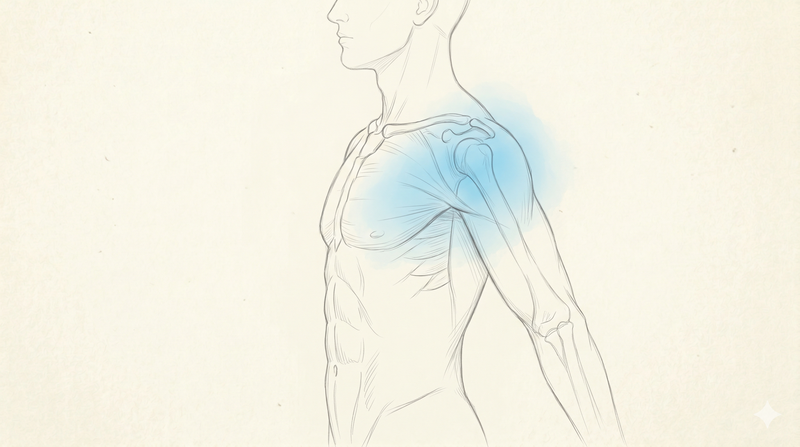
The yoga chair makes supported backbends and shoulder openers approachable for any body.
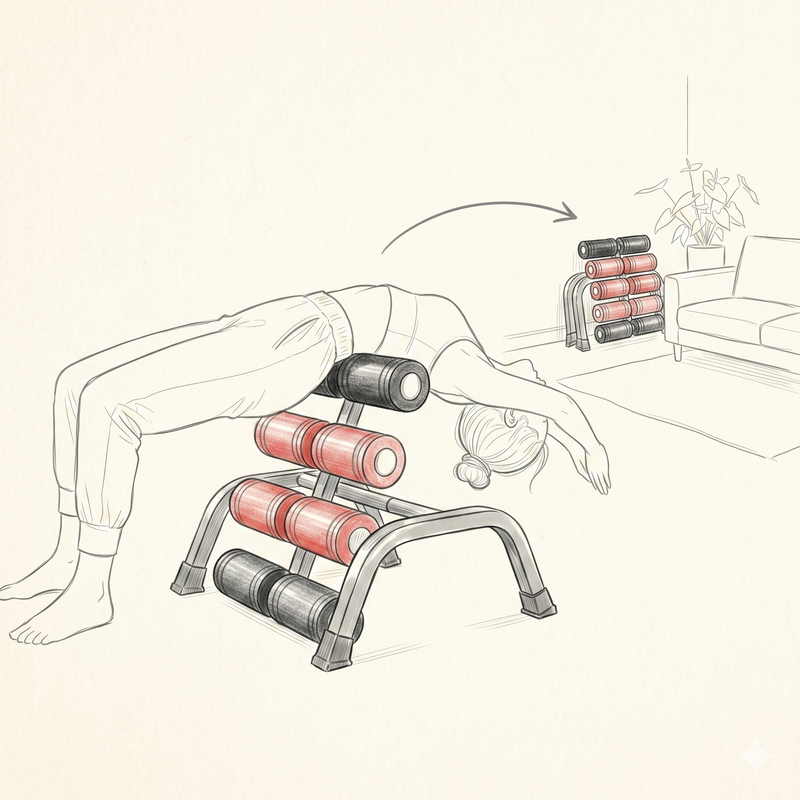
Six inches folded. Furniture-grade materials. The opposite of garage equipment — which is the whole point of equipment you actually use.
Two side panels, one shaft, four roller pairs. Single carton, no shipping straps to fight.
Drop each side panel onto the base. Tighten two hand-knobs by feel — no Allen key.
Each roller spins free on the shaft. Slide them on, cap the ends, the bench is built.
Pop the knob, swing the frame to 135°, 180°, or 225°, snap it back. Lie down. Breathe.
Three weeks in and I no longer wince getting out of the car. I use it for five minutes before bed and ten in the morning.
The 6-inch fold is real. It tucks behind the bookshelf and I forget it exists until I need it.
Sold my decline bench, my inversion table, and gave away the yoga chair I never used. The Deflex does all three better.
My old inversion table creaked like a haunted house. This one is silent.
Timed myself. Eleven minutes with a beer. No tools. The instructions are a single fold-out card with diagrams.
I asked my physical therapist before buying. She knew the brand and said “buy the Deflex.” Three months later my disc herniation is barely a memory.

“I’m a runner and I sit at a desk. The first piece of equipment I’ve kept past month two.”

“My patients ask where I bought it. The Deflex is the only home unit I recommend without caveats.”
Still unsure? Email care@deflex.co — we’ll usually reply within four hours.
About 5 minutes, no tools required. Slot each side panel onto the base, slide the rollers onto the shafts, finger-tighten two hand-knobs. A single fold-out card with diagrams comes in the box.
Rated to 300 lb and tested past 600. The frame is 14-gauge powder-coated steel, welded at every joint.
30-night in-home trial. If it doesn’t earn its spot in the room, send it back at our cost. Full refund within five business days.
We ship from our Portland, Oregon warehouse via UPS Ground. Most orders leave within 24 hours and arrive in 3–5 business days. Free shipping on every order.
One year on the frame and the rotating shafts. Ninety days on the foam rollers. If anything fails under normal use, we’ll repair or replace it.
Anyone with a stiff back, a small apartment, and a will to stretch every day. If you have a herniated disc, an inner-ear condition, or are pregnant, talk to your physician before use.
Yes. The vulcanized rubber feet grip hardwood, low-pile rugs, and tile equally well. For thick shag rugs, we recommend a small mat underneath.